
.jpg)
Soft skills training has traditionally been delivered through online courses, videos, and quizzes. While these methods have helped organisations scale training quickly, many learning leaders now question whether conventional e-learning alone can genuinely change behaviour.
AI-powered immersive training platforms such as Bodyswaps represent a different approach. Rather than learning about communication or leadership in theory, learners practise real conversations in realistic simulations and receive immediate feedback.
Understanding how these approaches differ helps organisations choose the right mix of learning methods.
What Traditional e-Learning Does Well
Traditional e-learning has played a major role in digital learning transformation across higher education, healthcare, and corporate training. It remains valuable for several reasons.
1. Scalable knowledge delivery
E-learning allows organisations to deliver consistent information to large audiences. Policies, frameworks, and conceptual models can be distributed globally with minimal cost once content is created.
2. Structured learning pathways
Well-designed e-learning modules can guide learners through a structured curriculum, combining videos, readings, and assessments to support knowledge acquisition.
3. Compliance and documentation
For regulated sectors such as healthcare or finance, e-learning provides clear records of completion, supporting compliance and accreditation requirements.
4. Foundational theory
Soft skills often include conceptual foundations such as communication frameworks, conflict resolution models, or psychological safety principles. E-learning works well for introducing these concepts.
For these reasons, e-learning remains a core component of many training strategies.
Where Traditional e-Learning Falls Short for Behaviour Change
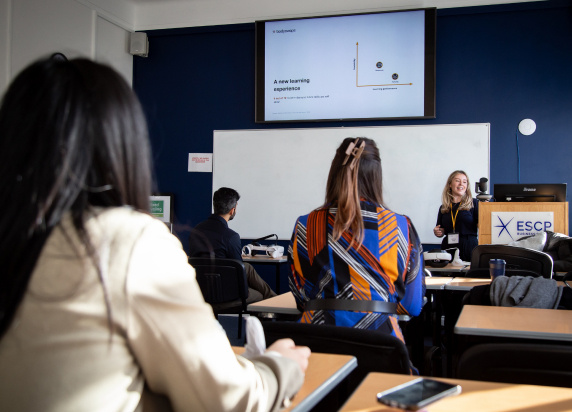
Despite its strengths, traditional e-learning struggles to develop practical interpersonal skills.
Limited opportunity to practise
Soft skills are behavioural. Skills such as giving feedback, handling difficult conversations, or demonstrating empathy require repeated practice. Watching videos or reading scenarios rarely provides enough active rehearsal.
Passive engagement
Many e-learning courses rely heavily on passive formats such as slides, narration, or multiple-choice quizzes. These formats measure knowledge recall rather than applied communication ability.
Lack of personalised feedback
Learners rarely receive meaningful feedback on how they communicate, how their tone affects others, or how their responses could improve.
Low psychological realism
Real conversations involve uncertainty, emotion, and social pressure. Traditional e-learning scenarios often feel predictable and artificial, reducing transfer to real-world situations.
As a result, learners may understand a communication framework but still struggle to apply it in practice.
How Immersive Simulation and AI Feedback Change Outcomes
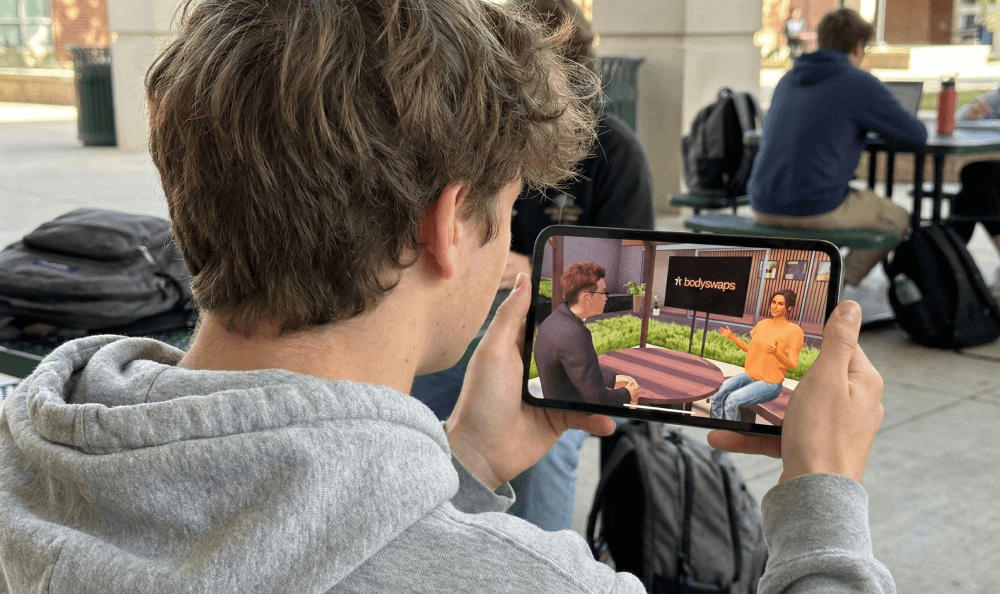
Simulation-based learning addresses many of the limitations of traditional e-learning by focusing on experiential practice.
Practice in realistic scenarios
Immersive simulations place learners in realistic workplace situations, such as:
- Giving constructive feedback
- Handling a frustrated patient or colleague
- Leading a difficult team conversation
- Addressing bias or inappropriate behaviour
Learners must actively respond rather than passively observe.
Safe environments for experimentation
Because simulations are risk-free, learners can practise difficult conversations without fear of real-world consequences. This encourages experimentation and repeated practice.
AI-powered feedback
Platforms such as Bodyswaps use AI to analyse learner responses and provide immediate feedback on factors such as:
- clarity of communication
- empathy and tone
- listening behaviours
- inclusivity and professionalism
This feedback helps learners understand not just what they said, but how it was perceived.
Perspective-taking through immersive learning
Immersive simulations can also allow learners to experience scenarios from different perspectives, strengthening empathy and self-awareness.
This combination of practice, reflection, and feedback supports the development of real behavioural skills rather than theoretical knowledge.
When to Combine Both Approaches
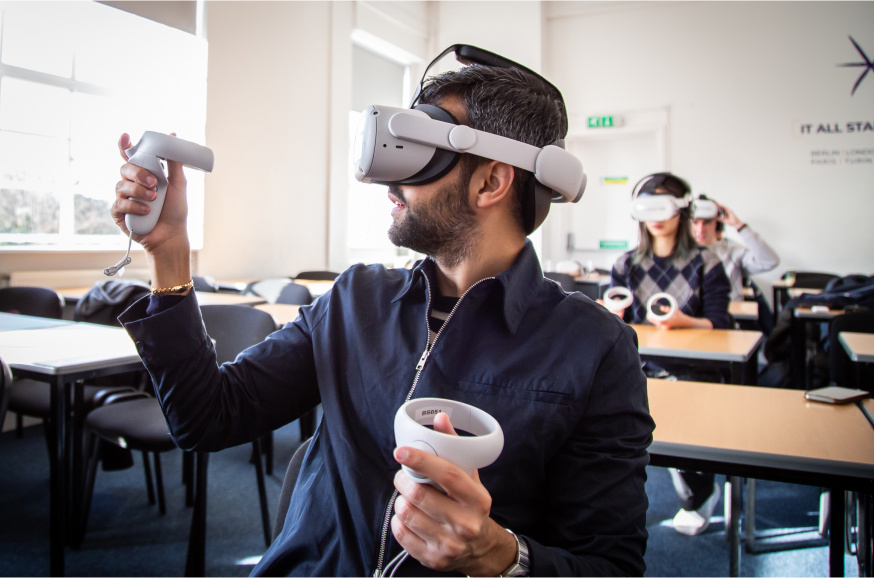
The most effective soft skills programmes rarely rely on a single method. Instead, they combine traditional e-learning with immersive simulation.
A blended approach may look like this:
1. E-learning for foundational knowledge
Use digital modules to introduce key concepts such as:
- communication frameworks
- psychological safety
- cultural competence
- conflict resolution models
2. Simulation for behavioural practice
Follow theory with immersive practice where learners apply these frameworks in realistic conversations.
3. AI feedback for continuous improvement
Learners repeat simulations and refine their responses based on personalised feedback.
4. Reflection and coaching
Group discussions, facilitator sessions, or reflective exercises can further reinforce learning.
This combination ensures learners both understand the principles of effective communication and practise applying them in realistic situations.
Choosing the Right Approach for Soft Skills Training
Traditional e-learning remains valuable for delivering knowledge at scale. However, when the goal is behavioural change, learners need opportunities to practise and receive feedback.
Simulation-based learning platforms such as Bodyswaps extend digital learning beyond information delivery into experiential skill development. By combining immersive scenarios with AI-driven feedback, organisations can help learners move from understanding soft skills to actually demonstrating them.
For many institutions and employers, the most effective strategy is not choosing between approaches, but designing programmes where e-learning provides the foundation and immersive simulations build real-world competence.
Frequently Asked Questions
Is e-learning effective for soft skills training?
E-learning can effectively teach the concepts and frameworks behind soft skills. However, on its own it often struggles to develop behavioural skills such as communication, empathy, or leadership because learners have limited opportunities to practise.
What is the difference between simulation-based learning and e-learning?
Traditional e-learning focuses on knowledge delivery through videos, readings, and quizzes. Simulation-based learning focuses on experiential practice, placing learners in realistic scenarios where they must actively respond and receive feedback.
Why is simulation useful for soft skills development?
Soft skills improve through practice and reflection. Simulations allow learners to rehearse difficult conversations in a safe environment while receiving feedback on their communication, tone, and decision-making.
Can simulation replace e-learning?
Simulation does not replace e-learning. Instead, the two approaches work best together. E-learning introduces concepts and frameworks, while simulations help learners apply them in realistic situations.
What is interactive soft skills training?
Interactive soft skills training requires learners to actively participate rather than passively consume content. This may include role-play, scenario-based learning, immersive simulations, and AI-driven feedback systems that analyse communication behaviours.
Summary
Traditional e-learning is highly effective for delivering knowledge and theoretical frameworks at scale. However, developing real communication and leadership behaviours requires practice, feedback, and realistic scenarios.
Immersive simulation platforms such as Bodyswaps complement e-learning by enabling learners to practise difficult conversations and receive personalised AI feedback, helping translate knowledge into real workplace skills.
