
.jpg)
Picture a Tuesday morning in a careers and student experience office. A nursing lecturer emails asking for a way to give 200 students practice de-escalating an agitated patient's family member before their first clinical placement. Down the corridor, a business lecturer wants final-year students to negotiate a supplier contract for a capstone project, but can't spare three seminar slots to run it live with real people. And by Friday, more than a hundred graduating students will walk into job interviews they have never actually rehearsed out loud.
Three different requests. One shared problem: everyone wants students and staff to practise a high-stakes conversation before it counts, and none of it scales with the staff hours available to run it.
This is exactly the gap that AI roleplay platforms were built to close. But “AI roleplay” now covers everything from enterprise sales-pitch trainers to VR public-speaking apps, and not all of them are built for de-escalation, negotiation, or difficult-conversation practice at institutional scale. We compared seven of the leading platforms against the criteria that actually matter for higher education: de-escalation and negotiation depth, evidence of impact, and how well each one fits into a curriculum rather than sitting outside it.

Why this matters more than a soft-skills checkbox
DE-ESCALATION & COMMUNICATION READINESS — THE NUMBERS
01The evidence for prioritising this kind of practice is specific, not anecdotal. According to NACE's 2025 Perception Gap research, 78.1% of students rate themselves as proficient communicators, but only 53.5% of employers agree — a 24.6% gap that is one of the widest of any career-readiness competency NACE tracks. More than three in four employers in NACE's Job Outlook 2025 survey named communication a critical attribute when hiring new graduates.
The World Economic Forum's Future of Jobs Report 2025 found that 63% of employers cite the skills gap as the single biggest barrier to workforce transformation, even as demand grows for the human skills — leadership, social influence, resilience — that sit underneath negotiation and de-escalation. Employers are also investing to close that gap: half of the global workforce completed formal skills training in 2025, up from 41% in 2023, according to the same report.
The stakes are highest in healthcare. CRICO Strategies, a division of Harvard's Risk Management Foundation, analysed more than 23,000 malpractice claims and found that 30% involved a communication breakdown rather than a clinical or technical error — spanning general medicine, obstetrics, nursing, and surgery. A 2025 study published on ScienceDirect had 40 prelicensure nurse practitioner students complete roughly 12 hours of VR-based de-escalation and crisis-communication training alongside university police services, reporting improved confidence and interprofessional collaboration.
Communication isn’t failing because graduates don’t understand the theory. It’s failing because most curricula give them almost no chance to practise the conversation out loud before it matters.
Why peer roleplay and one-off workshops don't close the gap
Most institutions already know practice matters — it's why mock interviews, negotiation seminars, and de-escalation workshops exist. The problem is structural, not conceptual:
- Scheduling: live roleplay with a facilitator or standardised patient doesn't scale to a full cohort without a large staff-to-student ratio.
- Repetition: a student who freezes in a mock interview or a de-escalation scenario usually gets one attempt, not the ten or twenty repetitions that actually build a new response.
- Subjectivity: feedback from a peer or a single observer varies session to session, which makes it hard to benchmark progress or evidence outcomes for accreditation.
- Faculty time: negotiation, de-escalation, and interview practice all compete for the same scarce block of contact hours.
AI roleplay doesn't replace human-led practice or clinical simulation — but it does let every student rehearse the conversation privately, as many times as they need, with consistent feedback, before they ever do it live.
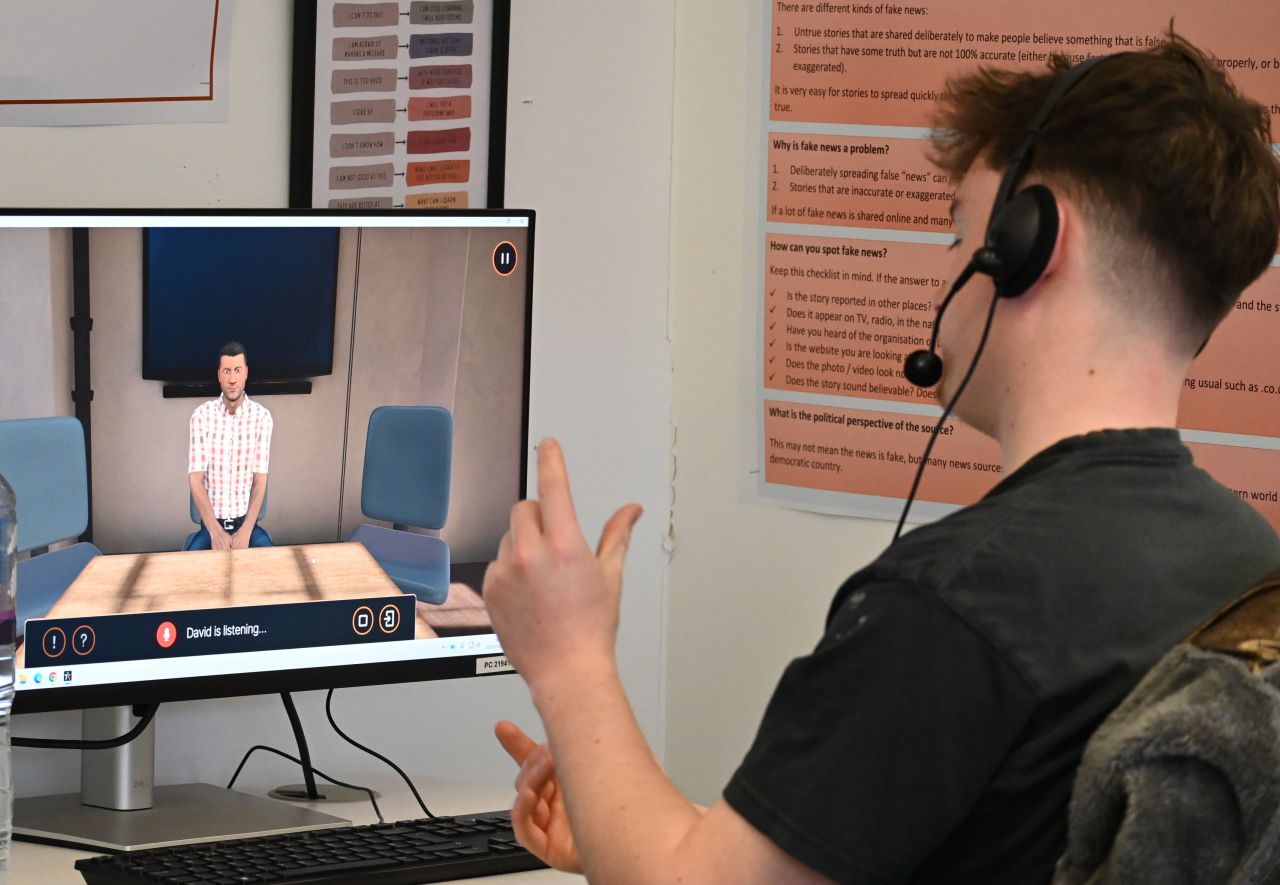
What to look for in an AI roleplay platform
Not every AI roleplay tool is built for the same job. Before comparing platforms, it's worth being clear on the criteria that matter for de-escalation, negotiation, and interview training in a higher education setting:
- Cohort-scale deployment: can the same scenario be assigned to 200 students and tracked at class level, not just used one learner at a time?
- Curriculum integration: does the roleplay sit inside a learning pathway with preparation and reflection, or is it a standalone simulation with nothing either side of it?
- LMS / LTI compatibility: can it be assigned and graded inside Moodle, Canvas, or Blackboard without extra admin work?
- Feedback quality: is feedback specific to the de-escalation or negotiation technique used, or limited to delivery metrics like pacing and filler words?
- Evidence and device flexibility: is there a published evidence base, and can students without VR headsets still get the full experience on desktop or mobile?
The 7 platforms, compared
We assessed each platform against those criteria, with a specific focus on de-escalation, negotiation, difficult-conversation, and interview practice rather than general presentation or sales training.
1. Bodyswaps
Bodyswaps is built around learning pathways rather than standalone simulations: educators combine scaffolded modules, customisable AI roleplay, and reflection or assessment into a single, reusable flow. Designed based on pedagogical research, Bodyswaps' de-escalation roleplay lets educators tailor the scenario to their learners' context and returns AI-written feedback against specific de-escalation techniques, not just delivery style. A dedicated negotiation and conflict-management module, developed with Sage, sits alongside a healthcare-specific pathway on navigating difficult patient interactions, mapped to the AACN 2021 Essentials. An Open Conversation builder lets staff create any custom scenario — including interview practice — from a natural-language prompt.
Over 2,000 pathways have been built by educators to date, and LTI 1.3 integration allows pathways to be assigned, tracked, and graded inside an institution's existing LMS. Content runs on VR, desktop, and mobile, so cohorts without headset access aren't excluded.
Best for: institutions that need de-escalation, negotiation, and interview practice built into a curriculum at scale, with class-level analytics for quality assurance and accreditation evidence.
Try Bodyswaps for free →
2. VirtualSpeech
VirtualSpeech offers 40+ AI roleplay scenarios covering difficult conversations, negotiation, debate, sales, and interviews, available in both VR and browser-based formats and in 15+ languages. Its negotiation practice is explicitly built around the Harvard Method, and a personal AI coach, Hugh, provides a two-way reflective conversation after each session rather than a one-off score. Multi-avatar panels support scenarios like panel interviews or negotiating with multiple stakeholders at once.
Best for: institutions that want a large, ready-made scenario library to supplement existing modules, without necessarily building a full curriculum pathway around it.
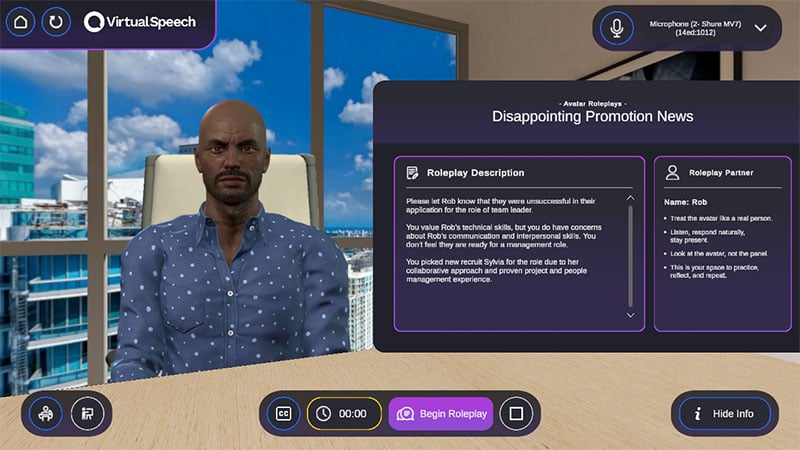
Source: VirtualSpeech
3. Yoodli
Yoodli's roots are in speech analytics rather than curriculum design, and it shows: it tracks filler words, pacing, and clarity in granular detail, and offers AI roleplay templates including difficult conversations, behavioural interviews, and multi-persona panels. Education customers use it for mock interviews and tutoring support, and it integrates with common LMS platforms. Following a $40 million Series B, Yoodli's roadmap has leaned further into enterprise sales enablement, with education framed as one use case among several rather than the primary focus.
Best for: giving individual students a private space to rehearse interview delivery and get detailed speech-mechanics feedback, alongside — rather than instead of — curriculum-level de-escalation and negotiation training.
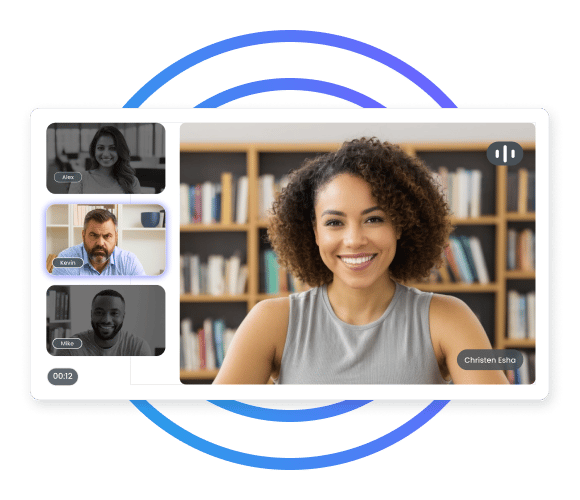 Source: Yoodli
4. Mursion — best for high-fidelity, human-coached de-escalation practice
Mursion takes a different technical approach: AI-driven avatars are guided in real time by trained human “simulation specialists,” blending automation with live human judgement. This produces some of the most convincing de-escalation practice available — Southern Methodist University's education faculty use Mursion avatars to help trainee teachers practise de-escalating classroom conflict, and Mursion's own scenario library names de-escalation, constructive feedback, and change management as core competencies.
Best for: programmes, particularly teacher preparation and healthcare, that want the realism of a human-guided simulation for a smaller number of high-stakes scenarios, rather than fully automated practice at unlimited scale.
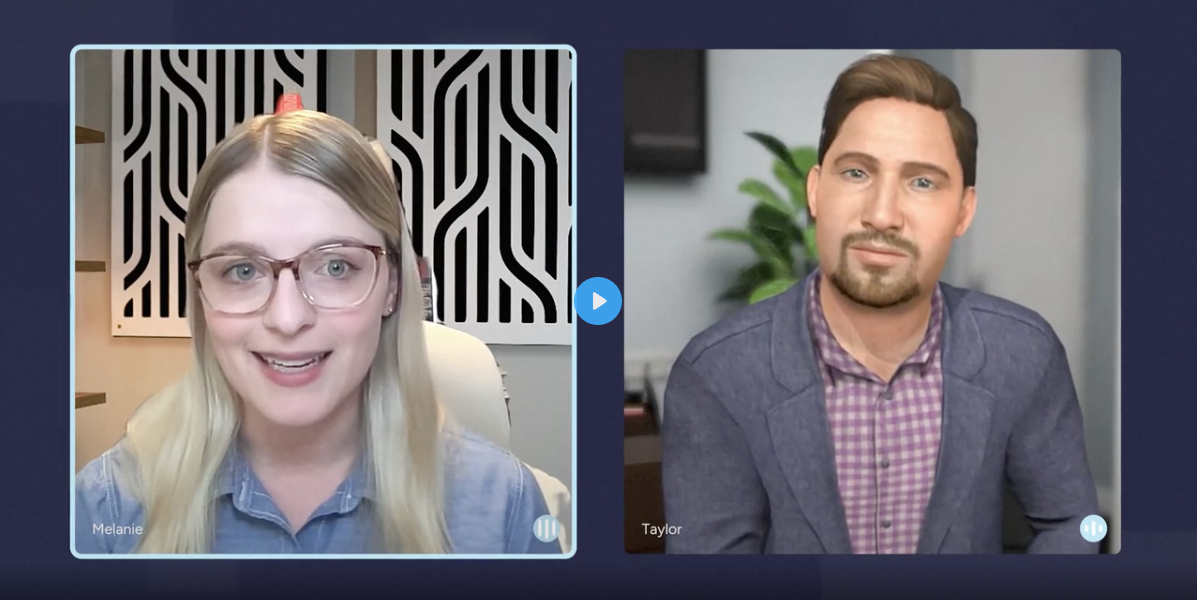
Source: Mursion
5. Ovation
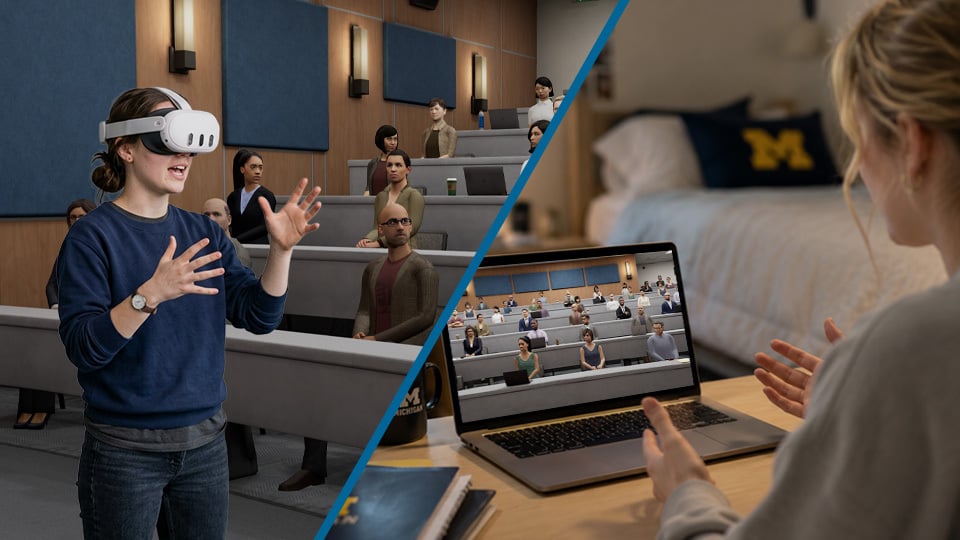
Ovation is a VR and desktop speaking simulator that gives real-time feedback on filler words, gaze distribution, and pacing, with lifelike venues and AI-generated coaching notes after each session. Its scenario range extends to interviews, conflict resolution, and workplace investigations, and one documented deployment saw 254 students practise interviews, conflict resolution, and leadership conversations in its first year. Its core strength, though, remains presentation delivery and speaking-anxiety reduction rather than the substance of a negotiation or de-escalation exchange.
Best for: careers services that want a dedicated tool for interview rehearsal and public-speaking confidence, used alongside a separate platform for negotiation or de-escalation depth.
Source: Ovation
6. Virti
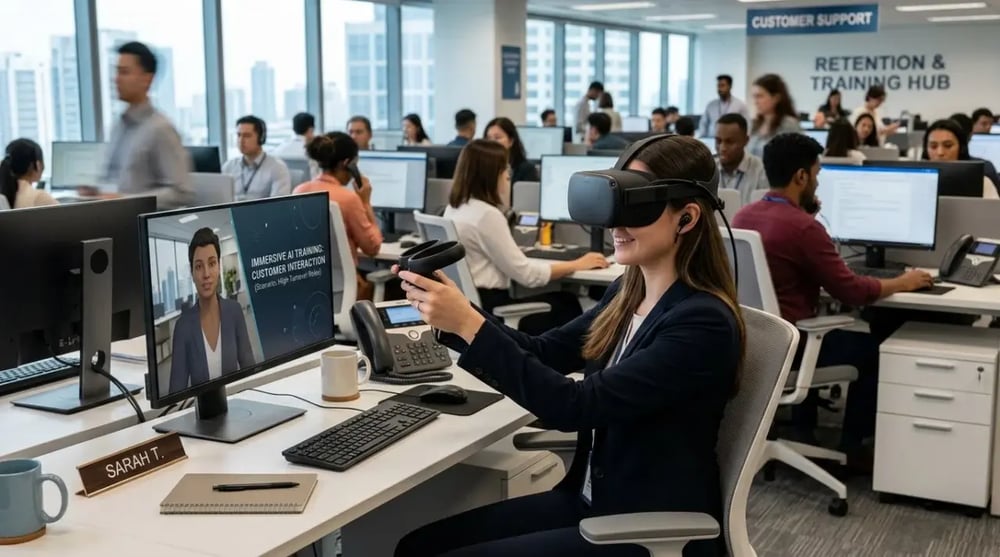
Virti combines AI roleplay with interactive video simulation, and has a strong track record in healthcare: it trained hundreds of clinicians at Cedars-Sinai and supported UK NHS staff on PPE use and communicating with distressed patients and families during the pandemic. Its current platform frames de-escalation, empathy, and complaint handling as core customer-service use cases alongside healthcare communication, and integrates with LMS tools via SCORM.
Best for: health and social care faculties, or hospitality and customer-service programmes, that want de-escalation practice specifically grounded in clinical or service-recovery contexts.
Source: Virti
7. UneeQ
UneeQ's Immersive Training Platform uses emotionally intelligent, photorealistic digital humans to let learners “practise difficult conversations in a safe space” without a VR headset. It is enterprise infrastructure first — SOC2 and GDPR compliant, built for sales, customer service, and leadership training at companies including Dell, Nvidia, and Accenture — with education named as one of several sectors in its 2026 expansion plans, rather than a dedicated higher education product with pre-built curriculum content.
Best for: institutions already using UneeQ or a similar digital-human platform elsewhere in the organisation and looking to extend it to student-facing training, rather than those starting from scratch.

Source: UneeQ
Fast-track: which tool fits which need
- De-escalation, negotiation, and interview training inside a curriculum → Bodyswaps
- A broad scenario library to supplement existing teaching → VirtualSpeech
- Individual interview and speech-delivery coaching in sales scenarios → Yoodli
- Human-coached realism for a smaller number of high-stakes scenarios → Mursion
- Dedicated public-speaking anxiety and interview delivery practice → Ovation
- Clinical or service-recovery de-escalation grounded in video simulation → Virti
- Extending an existing enterprise digital-human deployment to students → UneeQ
The conversation still has to happen somewhere first
None of these platforms remove the need for real clinical supervision, live negotiation seminars, or human interview panels. What they change is where a student has their first attempt. Rather than a nursing student's first de-escalation happening with a genuinely distressed family member, or a graduating senior's first real interview being the one that decides their job offer, the first attempt can happen privately, with feedback, days or weeks earlier.
For institutions trying to embed that kind of practice across a whole cohort — not just for the students who happen to book a slot with a career adviser — the platforms that integrate into a learning pathway, plug into the LMS, and generate class-level evidence are the ones that hold up over a full academic year, not just a single workshop.
Try Bodyswaps free for 14 days →
FAQs
How do AI roleplay simulations improve de-escalation and negotiation training?
They let learners practise a tense conversation as many times as needed and get instant, specific feedback each time. That repetition builds calmer, more structured responses — the same responses real de-escalation and negotiation situations call for — without any risk to a real patient, customer, or colleague.
Which AI roleplay software works best for difficult conversation training?
Platforms built around structured learning pathways, such as Bodyswaps, tend to work best for difficult conversation training, because the roleplay is paired with preparation and reflection rather than left as a one-off chat with an avatar.
What are the top AI roleplay solutions for student interview practice?
Bodyswaps, Yoodli, VirtualSpeech, and Ovation all offer dedicated interview practice. The right choice depends on whether interview practice needs to sit inside a wider employability programme with tracked outcomes, or work as a standalone tool students use on their own.
Which AI conversation simulation platforms suit university employability programs?
Platforms with LMS or LTI integration, class-level analytics, and curriculum-aligned pathways suit employability programmes best, since career services can track cohort progress and evidence outcomes for accreditation. Bodyswaps and VirtualSpeech are the two most commonly deployed at this scale.
Further reading
- Bodyswaps for higher education institutions
- De-escalation skills AI roleplay
- The pedagogy behind Bodyswaps
- How Bodyswaps uses AI coaching and feedback
- Preparing students for workforce readiness
References
1. National Association of Colleges and Employers (NACE). “The Gap in Perceptions of New Grads’ Competency Proficiency and Resources to Shrink It,” 2025 Perception Gap research, naceweb.org (2025).
2. National Association of Colleges and Employers (NACE). Job Outlook 2025, revised January 2025.
3. World Economic Forum. The Future of Jobs Report 2025, January 2025.
4. CRICO Strategies, a division of the Risk Management Foundation of the Harvard Medical Institutions. Malpractice Risks in Communication Failures, CBS Report (2015–16).
5. “Virtual Reality for Interprofessional De-escalation Training: A Technological Approach,” ScienceDirect (2025).
6. Tang, C.T., Lim, L.J.H., Lee, C.T.M., et al. “The utilization of virtual reality in the training of de-escalation of aggression for both providers and users of public and healthcare services,” Frontiers in Medicine (2026).
7. Bodyswaps. De-escalation skills AI training; Navigating Difficult Interactions in Healthcare learner pathway; Open Conversation; AI coaching features; Learner Pathway Builder. bodyswaps.co (accessed June 2026).
8. VirtualSpeech. AI-Powered Roleplays for Soft Skills; Business Negotiations practice. virtualspeech.com (accessed June 2026).
9. Yoodli. AI Roleplays platform and Education industry page. yoodli.ai (accessed June 2026).
10. Mursion. AI Conversation Simulator with Live Coaching. UCSF Learning & Organization Development (accessed June 2026); SMU Simmons School of Education, “Virtual environment teaches classroom strategies in turbulent times for future educators” (2024).
11. Ovation (VRSpeaking). AI Speaking Simulator for Desktop and VR. ovationvr.com (accessed June 2026).
12. Virti. AI role-play platform; Wikipedia, “Virti” (accessed 2026).
13. UneeQ. Immersive Training Platform launch announcement, BusinessWire (November 2025); UneeQ documentation, docs.uneeq.io (accessed June 2026).
*Some of the photographs used on this page are AI-generated.
