

THE CHALLENGE
Preparing Students to Talk to People, Not Just Care for Them
Running simulation at scale is always a challenge. And Canterbury Christ Church's nursing and midwifery cohorts are large — ten different Personal Academic Tutor groups spread across two campuses for First Year BSc students alone. Getting consistent communication practice to every student is expensive when it relies on actors, and unpredictable when it relies on peer role-play.
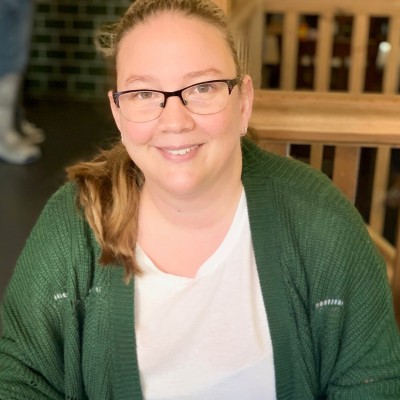
Stephanie Banfield, Lead for Nursing and Midwifery Simulation
When students did get to practise, the experience depended on who was playing the patient. Different lecturers, different prompts, different interactions. Students who were asked to play patients themselves often struggled — they'd never been in those situations, so they didn't know how to inhabit them convincingly.
Stephanie Banfield, Lead for Nursing and Midwifery Simulation
And then there was the virtual patient journey itself. Students could read about their patient, respond to clinical developments, consult with specialists. But they couldn't actually speak to them. That was a gap the team wanted to close.
The turning point
Seeing What Bodyswaps Could Do
The university came across Bodyswaps through colleagues already using it, and after seeing the active listening and mental health modules decided to bring it into nursing.
What drew them in wasn't just the technology. It was what the technology made possible: communication practice that every student could access, without the cost of actors or the variability of peer role-play.
Chloe was given the task of building the content. She quickly found that the platform's AI roleplay tools let her create exactly the kinds of interactions students needed and that the prompts could be shaped to match the specific learning outcomes she was trying to hit.
The solution
A Patient You Can Actually Speak To
The virtual patient journey at Canterbury Christ Church runs for a week. Students are split into groups, each assigned a patient. On the first day, a lecturer plays the patient — moving between groups, fielding questions, building a picture of who this person is. Then, over the following days, clinical experts host drop ins to answer students' referral questions. There are daily debriefs, escalating developments, and a discharge or clinical decision on the final day.
Third-year students get something more demanding: a virtual ward. Six patients to manage simultaneously, designed around the community virtual ward model that NHS trusts are increasingly using to reduce hospital admissions. The thinking was practical — these students might actually get jobs in those settings, and they should know what that looks like before they arrive.
Bodyswaps entered both journeys as the patient's voice.
Rather than having to imagine what a conversation with a patient might be like, students could now actually have one. A Bodyswaps character built around their patient meant everyone had the same interaction — not a different experience depending on who was in the room.
The most ambitious version came with a series of scenarios centred around Elvis Riddle.
Elvis is a patient on the third-year virtual ward who, over the course of the week, begins to deteriorate. When students speak to Elvis through Bodyswaps, they find a patient who is new onset, with symptoms of deterioration.
When they speak to his wife, they find someone under enormous stress. And when they have to hand over to a paramedic — a character Chloe built to be time-pressured, exacting, and a less-than-perfect communicator — they find out what happens when clinical communication goes wrong under pressure.
Pre- and post-questionnaires built into the Bodyswaps platform captured what students knew before and after.
The Outcomes
After the session, the shift was consistent. Confidence was the theme that came back most often — not just in the mechanics of the handover, but in staying composed when the conversation became difficult. Students described feeling more prepared for what a paramedic actually needs to hear, and more aware of the difference between a clinical handover in general and the specific, time-pressured exchange that paramedics require.
The roleplay also surfaced a knowledge gap students hadn't known was there. Resuscitation status, next of kin, allergies — several students reflected that they hadn't previously registered these as the first things a paramedic would ask for. The scenario's prompts brought those gaps into the open in a way that stuck.
Others caught their own habits mid-session: over-explaining, losing their thread under pressure, or including information the paramedic didn't need while omitting something they did. The ability to recognise that, reset, and go again without consequence was something students returned to repeatedly in their feedback.
Some reported that the paramedic avatar responded overly clinically with a suggestion of time pressure, which didn't allow students to over-explain — an observation that maps directly onto what Chloe had noticed herself when reviewing the transcripts. But even those responses tended to arrive at the same conclusion: that staying calm, communicating clearly, and remaining professional is exactly the skill the scenario was designed to build.
The university has found the balance between VR and face-to-face simulation that works for their students. The two things aren't in competition — they reinforce each other.
Stephanie Banfield, Lead for Nursing and Midwifery Simulation
What Happened in the Classroom
Not all of the impact came from the virtual patient journey. Some of the most telling moments happened in everyday sessions.
In one early session, students worked through a communication scenario and kept scoring low on empathy. Stephanie sat with them, pulled up their transcripts, and walked through what the feedback was actually showing.
Something else happened too. Students who had worked through a motivational interviewing scenario in Bodyswaps were later observed in face-to-face simulations using the technique — without being prompted to.
Chloe saw the same effect with conflict resolution and grounding techniques. Students were bringing things they'd practised in Bodyswaps into other environments, as though those techniques had simply become part of how they operated.
The Moments That Stayed
Some of the feedback neither Stephanie nor Chloe had anticipated at all.
During a debrief following the third-year virtual patient journey, one student mentioned that she had always been self-conscious about her accent — worried people couldn't understand her. When she read her transcript from the Bodyswaps session, she saw her words written back to her accurately, verbatim.

And then there was the band five simulation — a scenario Chloe built to prepare third-year students for one of the harder social realities of qualifying: that some of the healthcare assistants they'd worked alongside as students would respond differently once they became staff nurses.
During this simulation, students encounter a healthcare assistant avatar who is resistant until they demonstrate proper acknowledgement of the healthcare assistant's input into patient care. One student, hitting a wall with this scenario, stopped and reconsidered what they were doing. Then they changed their approach. And they got a different, better outcome.
Meeting NMC Standards
One of the pressures running underneath nursing education is regulatory. The Nursing and Midwifery Council's standards of proficiency set out a broad range of communication standards students must demonstrate before they qualify — and some of the hardest to teach are the ones that involve the most vulnerable patients.
Talking therapies sit in that category. Students need to show they can work with patients who may be in psychological distress, using specific therapeutic approaches, in ways that are sensitive and clinically sound.
The problem is that some of what students need to practise is genuinely difficult to expose them to. Bodyswaps provides a stepping stone for students to practise these conversations and build the appropriate skills and confidence before they face real patients in distress.
Students can work through a scenario more than once, review their transcript, and understand exactly where their language landed and where it didn't, before they ever have that conversation in a clinical setting.
That matters beyond just protecting the student. It protects the kind of patient who would otherwise have to absorb the cost of a learner finding their feet.
What Canterbury Christ Church has built is a programme where communication isn't an afterthought to clinical training, it's woven through it.
Students graduate having spoken to confused patients, stressed relatives, and demanding colleagues. They've heard themselves back. They've caught the moment their tone slipped and learned to correct it. They've practiced conversations that, in the real world, you only get one chance to get right. The question for any nursing programme is whether their students get that same preparation or whether the first time they face it is the real thing.
Lead for Nursing and Midwifery Simulation, Canterbury Christ Church University
- Leads simulation design and delivery across nursing and midwifery programmes at CCCU
- Responsible for scaling communication practice across large, multi-campus cohorts
- Works to align simulation experiences with NMC standards of proficiency
- Advocates for the combined use of VR and face-to-face simulation as complementary tools

- Specialises in simulation across adult, child, and mental health nursing
- Built CCCU's library of custom Bodyswaps AI roleplays, including the Elvis Riddle virtual ward series
- Designed the paramedic handover scenario and the band five staff dynamic simulation
- Reviews student transcripts and session data to identify learning patterns and close skills gaps
